


The Effects of Multi-national companies on employment in developing countries.
- Aug 11, 2017
- 1 min read
Offshoring and international outsourcing are merely a new manifestation of the development of trade between industrialized and developing countries. The benefits of these exchanges are immediate for the consumer (of the importing country) who sees the price of many consumer goods falling.
The benefit is also evident to corporations, which absorb an increasing share of low-priced imports from the South into their production processes, in turn generating productivity gains. Some of these gains are reflected in wages; Another part of these gains is reflected in the decline in the relative prices of manufactured goods, which supports the demand for industrial products.

Let's take for example, the multinational technology firm Apple. While the actual company itself is based in America, the actual parts of their technology is produced in developing nations such as China, Taiwan, Korea, and various other countries.
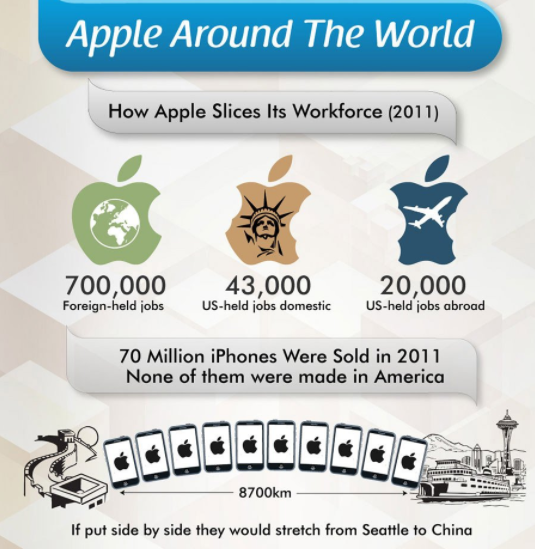
On the other hand, relocation and subcontracting foster the emergence of a solvable demand in the emerging countries hosting these factories: Australia exports to the country, in particular exports of products with higher manpower, to a skilled workforce. Both countries benefit from a ripple effect. Therefore, outsourcing work is not all that bad, and sometimes, countries can benefit from the invasion of multinational corporations.
Comments